
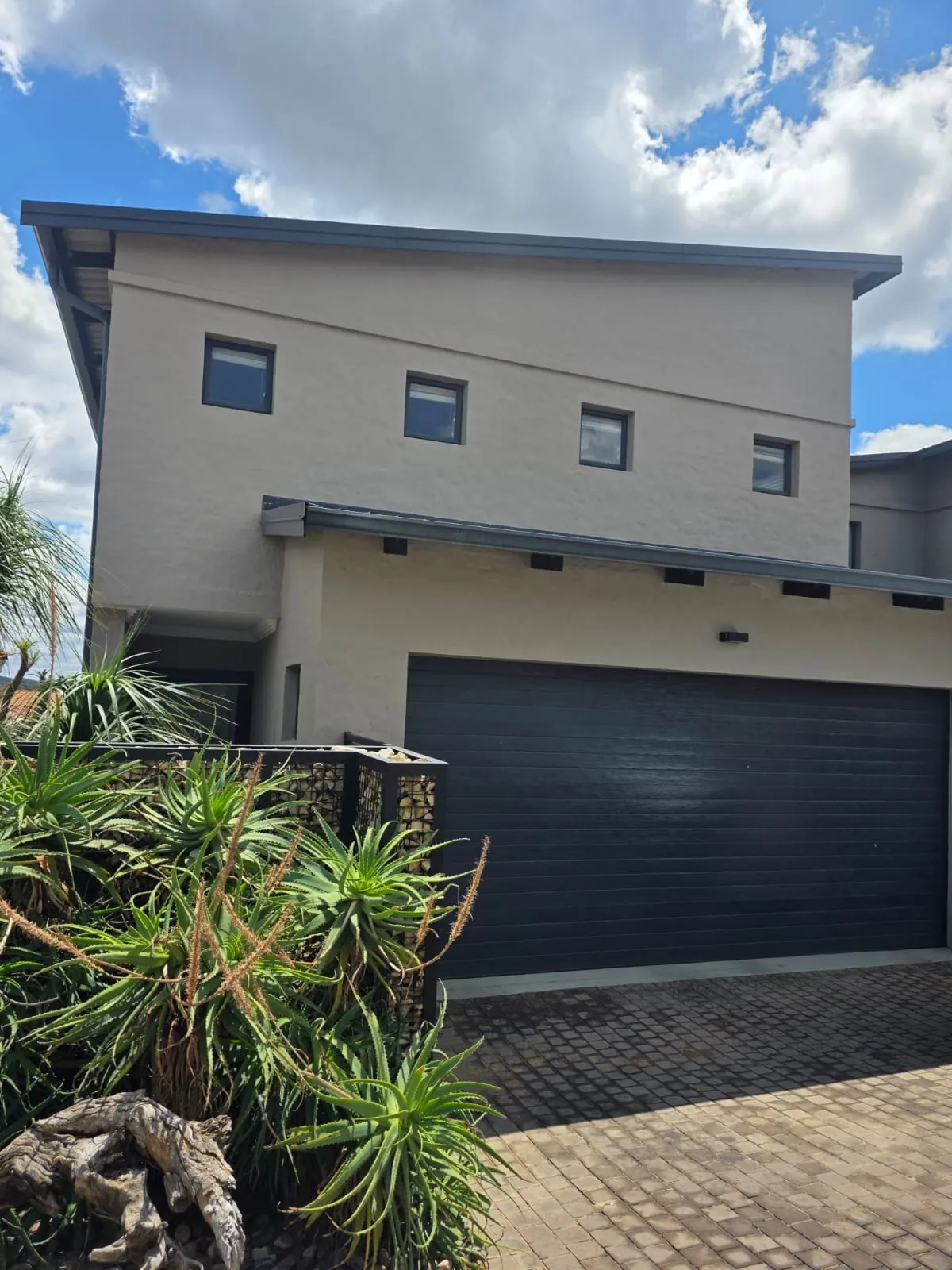
A fresh coat of paint changes the look of a house more than almost anything else you can do to the outside. It also protects the plaster, the brickwork and the woodwork from sun and rain. But exterior paint that looks good in the first month and starts flaking after one summer is a common story, and in almost every case the problem was not the paint itself. It was the preparation, the choice of product for the surface, or the timing.
This guide covers what should happen before, during and after an exterior repaint, so you know what to expect and what to ask when you get quotes for exterior painting in Pretoria.
1. Start with an honest look at the walls
Before anyone talks about colours, walk around the house and look closely at the existing surfaces. The things to note:
- Cracks in the plaster, especially around windows, doors and where walls meet
- Paint that is flaking, bubbling or peeling
- Chalky walls, where your hand comes away white or coloured when you rub it
- Damp marks, green growth or dark staining low on the walls or under gutters
- Rusted steel on gates, burglar bars and window frames
- Weathered timber on fascias, barge boards and doors
Each of these needs its own treatment before painting. A contractor who quotes after a quick glance from the driveway, without noting any of this, is guessing.
2. Fix the cause before you cover the symptom
Paint will not stop water. If a wall is damp because of a leaking gutter, a blocked downpipe, a failed roof flashing or rising damp, that needs to be sorted out first. Painting over it only hides the problem for a while, and the new paint will blister and lift as the moisture pushes through.
The same goes for cracks. Fine hairline cracks in the plaster are normal and can be filled and painted. Wider cracks, cracks that run diagonally from the corners of windows, or cracks that have clearly been filled before and opened up again may point to movement in the structure. Those are worth having looked at properly before the scaffolding goes up. Our approach is to repair cracks and treat damp before any paint goes on, because that is what decides how long the finish lasts.
3. Surface preparation is most of the job
On a well-run exterior paint job, more time goes into preparation than into painting. Typically that means:
- Washing the walls to remove dust, dirt, cobwebs and loose material, and treating any mould or algae growth
- Scraping off all loose and flaking paint back to a sound edge
- Raking out and filling cracks with a filler made for exterior use, then sanding smooth
- Dealing with chalky surfaces so the new paint has something firm to grip
- Sanding and spot-priming bare timber and treating rust on steel
- Masking windows, paving, plants and anything else that must not get paint on it
If a quote does not mention preparation at all, ask what is included. Two quotes for the same house can look very different simply because one includes proper preparation and the other does not.
4. Choose the right primer and paint for each surface
An exterior is not one surface. Plaster, face brick, fibre cement, timber and steel all behave differently and need products made for them.
- New or bare plaster usually needs a suitable plaster primer before the top coats.
- Old, chalky or powdery walls need a primer or sealer made to bind the surface.
- Steel needs rust treatment and a metal primer, then an enamel or a product made for metal.
- Timber needs a primer or a wood finish that can move with the wood as it expands and shrinks.
- Face brick is often best left unpainted. If it has been painted before, it needs the right product and preparation.
For the walls themselves, use a good-quality exterior paint from a reputable brand. Pretoria gets strong sun for most of the year, so UV resistance and colour fastness matter, especially on north- and west-facing walls. Follow the manufacturer's specification for the number of coats and the drying time between coats. Two proper coats over a correct primer will outlast one thick coat every time.
5. Colour choices that work in Pretoria sun
Dark colours absorb more heat. On a west-facing wall that takes the full afternoon sun, a very dark colour can fade faster and make the surface work harder as it heats and cools. Lighter and mid-tone colours tend to hold up better on large wall areas, with darker colours used for accents such as window frames, garage doors and trims.
Always test a sample patch on the actual wall and look at it in the morning and late afternoon. Colours look very different outside than they do on a small card under shop lights.
6. Timing the work around the weather
In Pretoria the weather is the biggest scheduling factor for exterior painting. Summer brings afternoon thunderstorms, and rain on paint that has not dried properly can wash it off or leave marks. The dry winter months are often a good time for exterior work, although very cold early mornings and strong wind can also affect how paint dries.
A good painter will:
- Check the forecast and not start a coat if rain is likely before it has had time to dry
- Avoid painting walls while they are in hot direct sun, and follow the sun around the house instead
- Wait for walls to dry out properly after rain before painting
- Stick to the temperature and drying times on the product data sheet
This means an exterior job can take longer than planned if the weather turns. That is better than rushing a coat on a damp wall.
7. Gates, burglar bars, fascias and the details
The details are where a paint job looks either finished or half-done. Steel gates and burglar bars should have rust dealt with and be primed before painting. Fascias and barge boards take a lot of sun and often need more preparation than the walls. Boundary walls are easy to forget in the quote and then expensive to add later, so decide up front whether they are included.
8. What to check when the job is done
Before the painters leave, walk around the house with them in good daylight. Look for missed areas, thin patches where the old colour shows through, paint on windows or paving, and clean lines where colours meet. Ask for the names and colour codes of the products used, and keep a little leftover paint for touch-ups later.
Planning to repaint the outside of your home?
If you are in Pretoria East or Centurion and want your exterior painted properly, with the cracks and damp sorted first, contact us to arrange a site visit and an itemised quote.